Guides › Mazes, sliding puzzles and switches
Mazes, sliding puzzles and switches
Published October 16, 2026.
Three mechanisms need no clue: you solve them with pure logic, by looking at them. Here is a method for each.
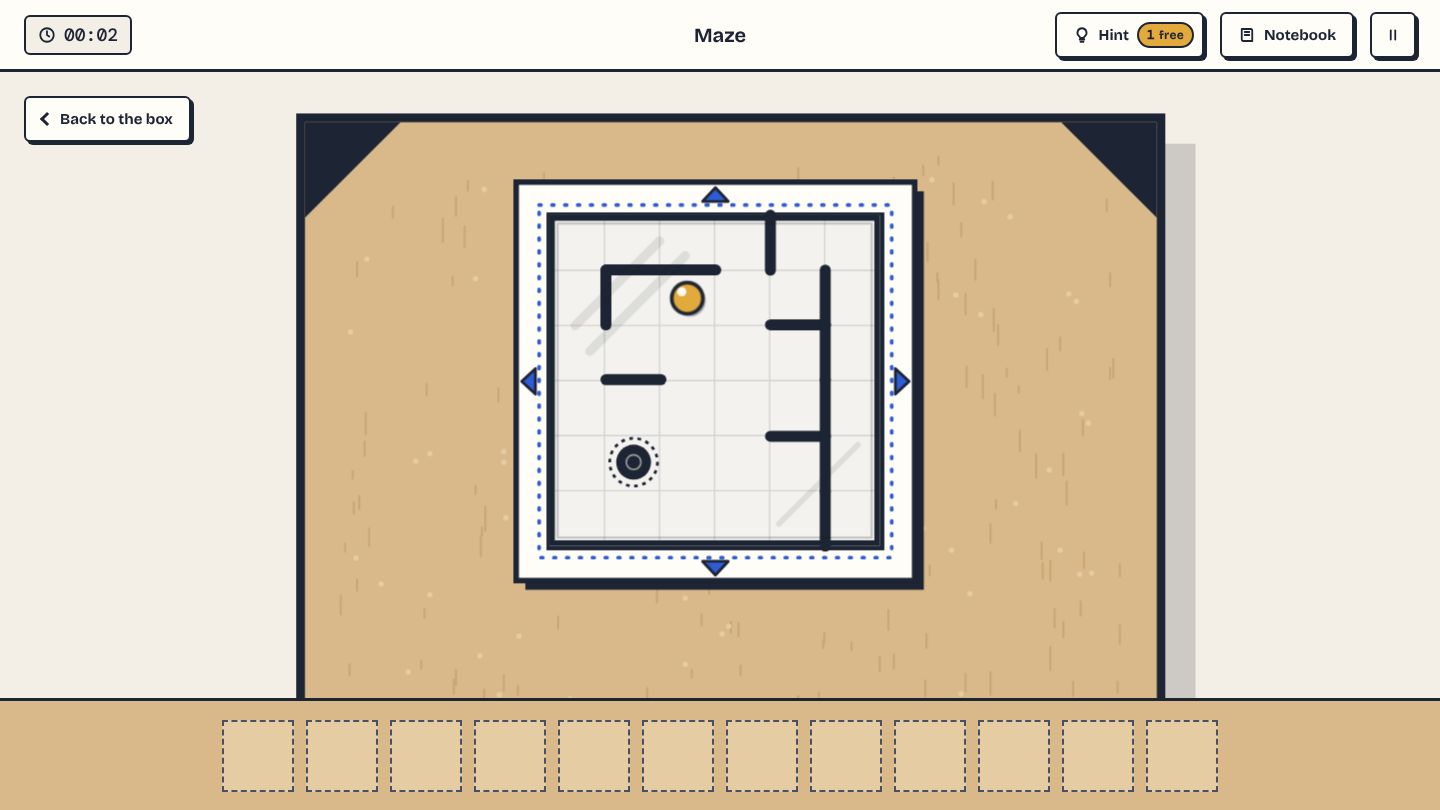
The maze: the marble only stops at walls
You drag in one direction and the marble rolls until the next wall. It does not stop where you would like: so think in routes, not in cells. First look for the cells where the marble can stop, then link them: from the starting cell, list the four possible moves and see where each leads.
The hole is often where the marble naturally stops, against a wall. Sometimes work backwards from the hole: which cells lead to it? Each maze is drawn from a seed, it is not the same from one day to the next.
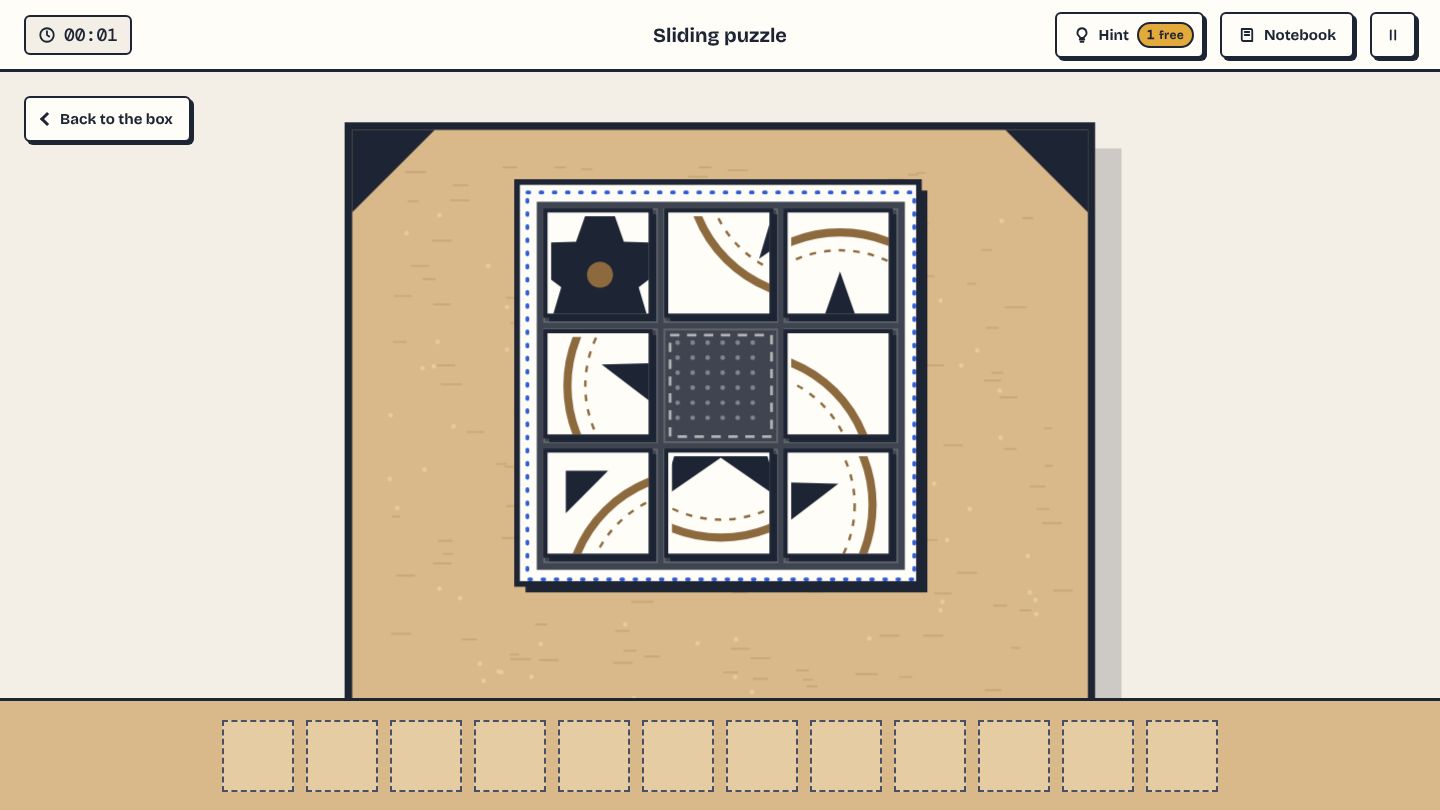
The sliding puzzle: the empty cell guides everything
Tap a piece next to the empty cell to slide it and put the picture back in order. Place the first row first, then the second, and never undo a finished row: the last cells are settled with small cycles of three pieces. The sliding puzzle is reserved for hard boxes: take the time to arrange it methodically.
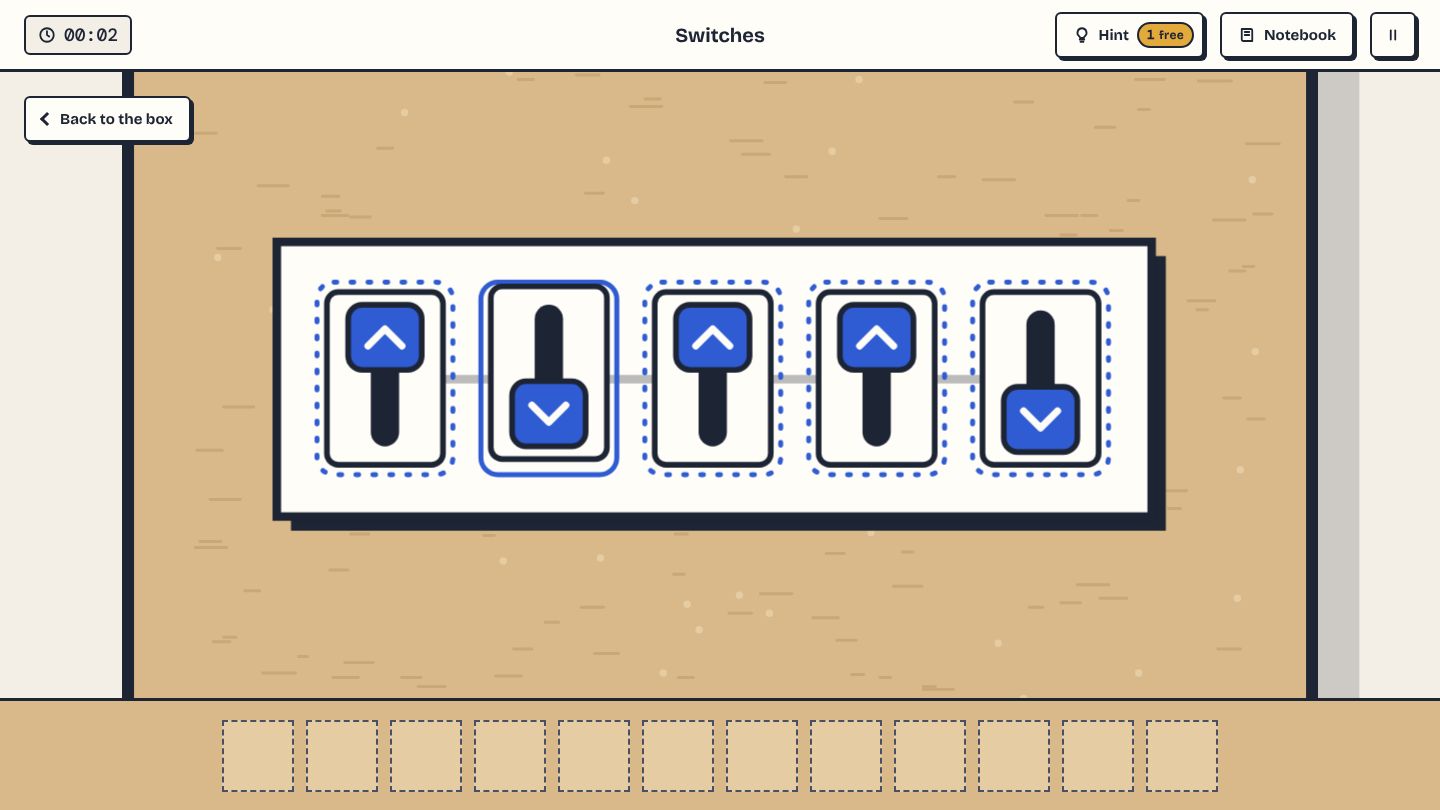
The switches: each one flips its neighbours
In a row or a 3×3 grid, each switch also flips its neighbours. The goal is to put them all on the same side. Two principles simplify everything: pressing the same switch twice cancels out, so each is used zero or one time; and the order of presses does not matter, only the set of pressed switches does.
In a grid, start with a row: by pressing the switches of the row below, you « push » the errors downwards until only the last row has any, which tells you which switches of the first row to press.
Classic mistakes
In the maze, the most frequent mistake is to look for the « straight » path to the hole: the marble only stops against a wall, and the right route is often a detour. In the sliding puzzle, it is to move pieces already well placed to save a move: it almost always costs more afterwards. With the switches, it is to press at random hoping to get lucky: a method, even a slow one, always beats trial and error.
None of these three mechanisms costs a mistake: trying them freely does not penalise the clock, only the time spent counts.
Practise in the game
The game's tutorials, with no clock and no penalty, let you practise this subject: